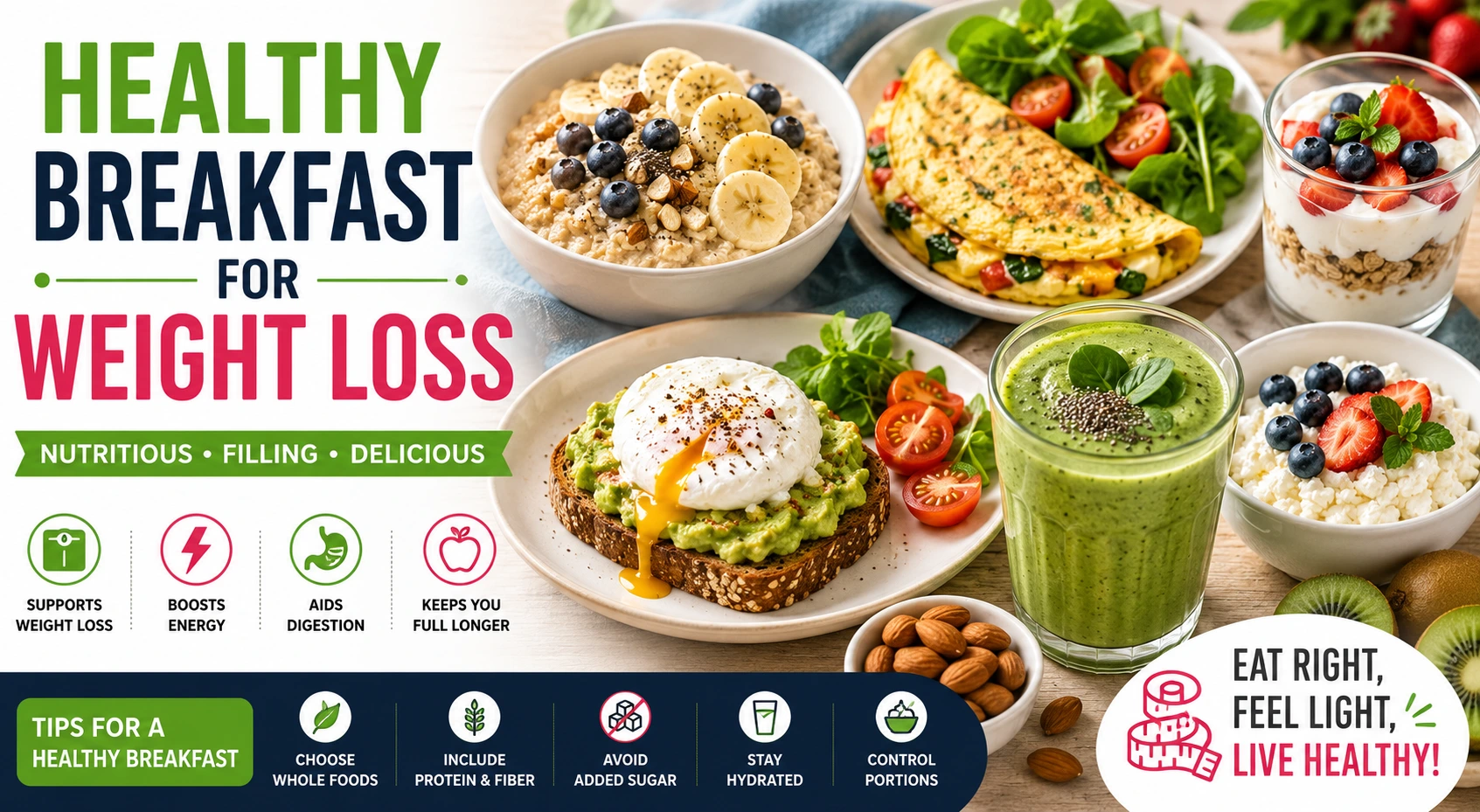
A healthy breakfast is one of the best ways to begin your day, especially if your goal is to lose weight. Eating a balanced breakfast can help control hunger, improve energy levels, and reduce unhealthy snacking throughout the day.
Many people skip breakfast to lose weight, but this may leave them feeling hungry later, leading to overeating. Choosing the right breakfast can help you stay full longer while providing your body with essential nutrients.
In this article, you’ll discover the best healthy breakfast for weight loss, simple meal ideas, foods to avoid, and useful tips for healthy eating.
Why Is Breakfast Important for Weight Loss?
A nutritious breakfast helps your body in several ways:
- Keeps you full for longer
- Supports healthy metabolism
- Reduces cravings
- Provides energy for daily activities
- Helps maintain stable blood sugar levels
- Improves focus and concentration
10 Healthy Breakfast Ideas for Weight Loss
1. Oatmeal with Fresh Fruits
Oatmeal is rich in fiber, which helps you feel full for a longer time.
Best toppings:
- Banana slices
- Blueberries
- Strawberries
- Chia seeds
- Cinnamon
Benefits
- High in fiber
- Supports digestion
- Keeps hunger under control
2. Greek Yogurt with Berries
Greek yogurt is packed with protein and contains fewer calories than many breakfast options.
Benefits
- High protein
- Supports gut health
- Helps build lean muscle
- Keeps you satisfied longer
3. Boiled Eggs with Whole Wheat Toast
Eggs are an excellent source of high-quality protein.
Benefits
- Low in calories
- Rich in protein
- Supports muscle health
- Helps reduce hunger
4. Fruit Smoothie
A homemade smoothie made with fresh fruits and yogurt can be a healthy breakfast.
Healthy ingredients:
- Banana
- Spinach
- Greek yogurt
- Oats
- Almond milk
Avoid adding extra sugar.
5. Avocado Toast
Whole-grain toast topped with mashed avocado provides healthy fats and fiber.
Benefits
- Heart healthy
- Filling
- Rich in vitamins
- Supports healthy digestion
6. Chia Seed Pudding
Chia seeds absorb water and expand, helping you stay full longer.
Benefits
- Rich in omega-3 fatty acids
- High in fiber
- Good source of protein
- Supports digestion
7. Cottage Cheese with Fruits
Low-fat cottage cheese is rich in protein and pairs well with fresh fruits.
Benefits
- High protein
- Low calorie
- Supports weight management
8. Vegetable Omelet
A vegetable omelet made with eggs, spinach, tomatoes, onions, and bell peppers is both nutritious and filling.
Benefits
- Rich in protein
- Packed with vitamins
- Keeps you energized
9. Peanut Butter and Banana Toast
Spread natural peanut butter on whole-grain toast and top with banana slices.
Benefits
- Healthy fats
- Natural energy
- Good source of protein
Choose peanut butter without added sugar.
10. Overnight Oats
Prepare oats the night before using milk or yogurt and refrigerate overnight.
Add:
- Chia seeds
- Fresh fruits
- Nuts
- Cinnamon
This makes a quick and healthy breakfast for busy mornings.
Also Read : How Mindful Eating Supports Weight Management
Benefits of Drinking Water on an Empty Stomach: 8 Amazing Health Benefits
Benefits of a Consistent Sleep Schedule: Why Sleeping at the Same Time Matters
Foods to Avoid at Breakfast
If your goal is weight loss, try to limit:
- Sugary cereals
- Pastries
- Donuts
- White bread
- Sweetened coffee drinks
- Sugary fruit juices
- Fried foods
- Processed snacks
These foods can increase hunger and add unnecessary calories.
Tips for a Healthy Weight Loss Breakfast
- Include protein in every meal.
- Eat fiber-rich foods.
- Drink a glass of water after waking up.
- Avoid added sugar.
- Choose whole grains instead of refined grains.
- Watch portion sizes.
- Include fresh fruits or vegetables.
Common Breakfast Mistakes
Many people make simple mistakes that can slow their weight loss progress.
Avoid these habits:
- Skipping breakfast
- Eating too much sugar
- Drinking sugary beverages
- Choosing processed foods
- Eating very large portions
- Not including protein
Conclusion
A healthy breakfast can make a big difference in your weight loss journey. Choosing nutritious foods such as oats, eggs, Greek yogurt, fruits, and whole grains can help keep you full, provide steady energy, and reduce unhealthy cravings.
Remember that weight loss works best when a balanced breakfast is combined with regular exercise, enough sleep, and healthy eating habits throughout the day.
Frequently Asked Questions (FAQs)
Q1. What is the healthiest breakfast for weight loss?
Ans – A breakfast that includes protein, fiber, and healthy fats—such as oatmeal with fruit, Greek yogurt, or eggs—is a great choice for weight loss.
Q2. Is oatmeal good for weight loss?
Ans – Yes. Oatmeal is high in fiber and can help you feel full for longer, which may reduce overeating.
Q3. Can I eat eggs every morning?
Ans – For many healthy adults, eggs can be part of a balanced breakfast. If you have specific medical conditions or dietary concerns, follow your healthcare provider’s advice.
Q4. Is skipping breakfast good for weight loss?
Ans – Skipping breakfast may work for some people depending on their eating pattern, but many people find that a balanced breakfast helps control hunger and prevents overeating later in the day.
Q5. Which fruit is best for weight loss?
Ans – Berries, apples, grapefruit, oranges, and bananas can all be part of a healthy weight-loss diet when eaten in appropriate portions.
Q6. What should I drink with breakfast?
Ans – Water, unsweetened green tea, black coffee (without added sugar), or low-fat milk are healthy choices.
Q7. Can smoothies help with weight loss?
Ans – Yes, if they are made with whole fruits, vegetables, protein, and no added sugar. Avoid high-calorie ingredients and sweetened syrups.
Q8. How many calories should a weight-loss breakfast contain?
Ans – The ideal calorie range depends on your age, activity level, and overall daily calorie needs. A balanced breakfast should fit within your total daily nutrition plan rather than focusing on a single number.