
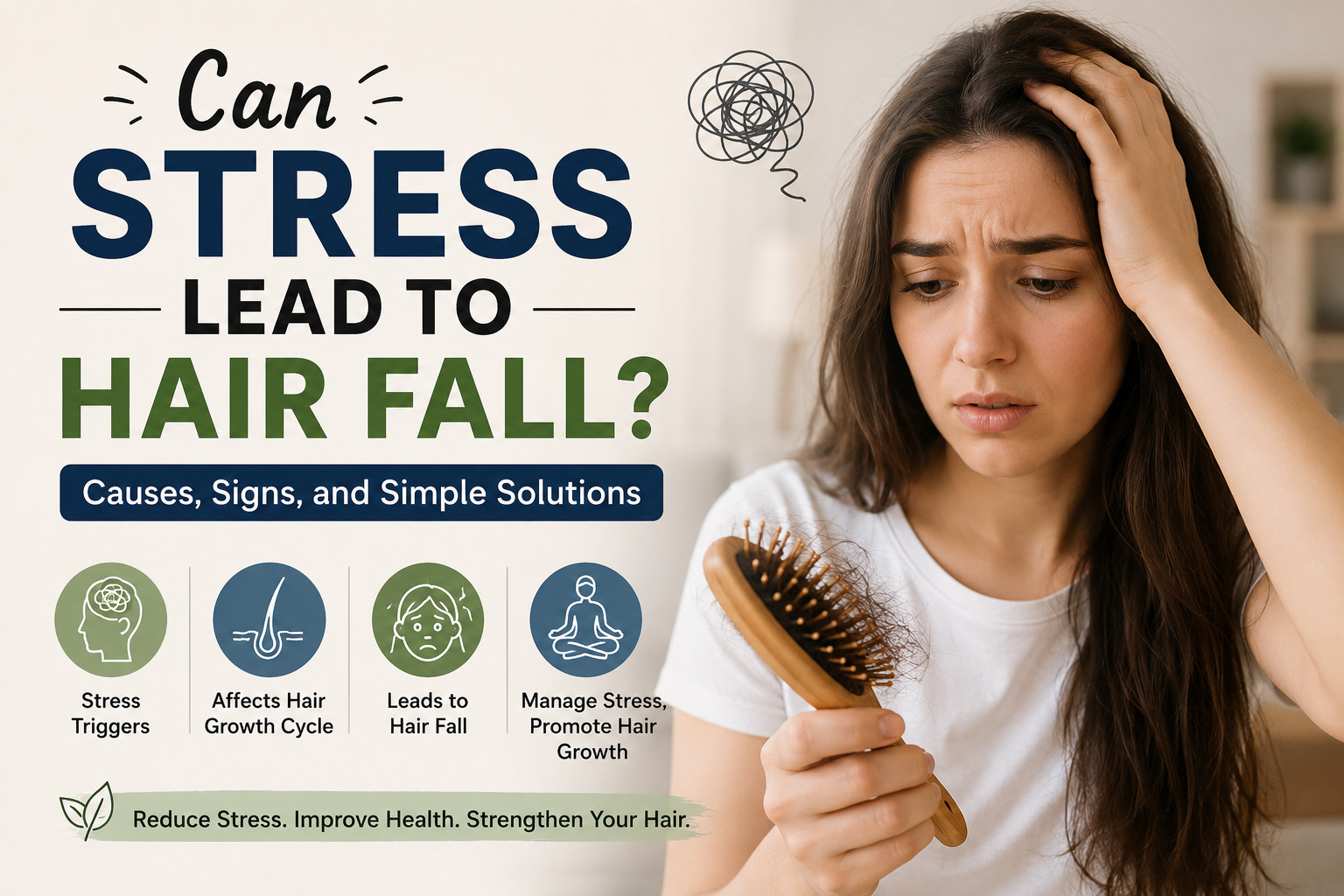
Hair fall is a common problem that affects both men and women. Many factors can cause hair loss, including poor diet, genetics, hormonal changes, and medical conditions. However, one important factor that is often overlooked is stress.
So, can stress lead to hair fall?
The simple answer is yes. High levels of stress can affect your hair health and may lead to increased hair shedding. In this article, we will explain how stress causes hair fall, the signs to watch for, and simple ways to manage stress-related hair loss.
What Is Stress-Related Hair Fall?
Stress-related hair fall happens when physical or emotional stress disrupts the normal hair growth cycle. As a result, more hair enters the shedding phase than usual.
This type of hair loss is often temporary. Once stress levels are reduced, hair growth may gradually return to normal.
How Does Stress Cause Hair Fall?
Hair grows in a cycle that includes growth, rest, and shedding phases. Severe or long-term stress can disturb this cycle and push a large number of hair follicles into the shedding stage.
As a result, you may notice:
- More hair on your pillow
- Hair falling out during washing
- Excessive hair in your comb or brush
- Increased hair shedding throughout the day
Also Read : Best Essential Oils for Hair: Natural Solutions for Stronger, Healthier Hair
Natural Remedies for Oily Scalp: Easy Ways to Control Excess Oil Naturally
Signs That Stress May Be Causing Your Hair Fall
Here are some common signs:
1. Sudden Increase in Hair Shedding
If you notice more hair falling than usual after a stressful event, stress may be the cause.
2. Overall Hair Thinning
Hair may become thinner across the scalp rather than forming specific bald patches.
3. Hair Loss After a Difficult Period
Hair fall often begins two to three months after a stressful situation such as illness, job pressure, emotional trauma, or lack of sleep.
4. Increased Anxiety and Fatigue
People experiencing stress-related hair fall may also feel tired, anxious, or emotionally overwhelmed.
Common Stress Triggers That Can Cause Hair Fall
Several situations can increase stress levels and affect hair health:
- Work pressure
- Financial problems
- Relationship issues
- Lack of sleep
- Major life changes
- Serious illness
- Academic stress
- Emotional trauma
Can Hair Grow Back After Stress-Related Hair Loss?
In many cases, yes.
If stress is the main cause and hair follicles remain healthy, hair growth often improves once stress levels are managed. However, recovery may take several months.
Patience is important because hair grows slowly.
How to Reduce Stress and Protect Your Hair
Get Enough Sleep
Aim for 7 to 9 hours of quality sleep every night. Good sleep helps the body repair itself and supports healthy hair growth.
Eat a Healthy Diet
Include foods rich in:
- Protein
- Iron
- Zinc
- Vitamin D
- Biotin
Healthy nutrition can support stronger hair and overall wellness.
Exercise Regularly
Physical activity helps reduce stress hormones and improves blood circulation.
Practice Relaxation Techniques
Try:
- Deep breathing exercises
- Meditation
- Yoga
- Mindfulness activities
These practices can help lower stress levels naturally.
Stay Hydrated
Drinking enough water supports overall health and may help maintain healthy hair.
When Should You See a Doctor?
Consult a healthcare professional if:
- Hair loss is severe
- Bald patches appear
- Hair fall continues for several months
- You experience other symptoms such as fatigue or sudden weight changes
A doctor can identify the underlying cause and recommend appropriate treatment.
Conclusion:
Stress can indeed lead to hair fall by disrupting the natural hair growth cycle. Although stress-related hair loss can be worrying, it is often temporary and may improve once stress is managed.
Getting enough sleep, eating a balanced diet, exercising regularly, and practicing relaxation techniques can help support healthy hair growth. If hair loss becomes severe or persistent, seeking professional advice is the best option.
Taking care of your mental health is not only good for your mind—it can also help keep your hair healthy and strong.