
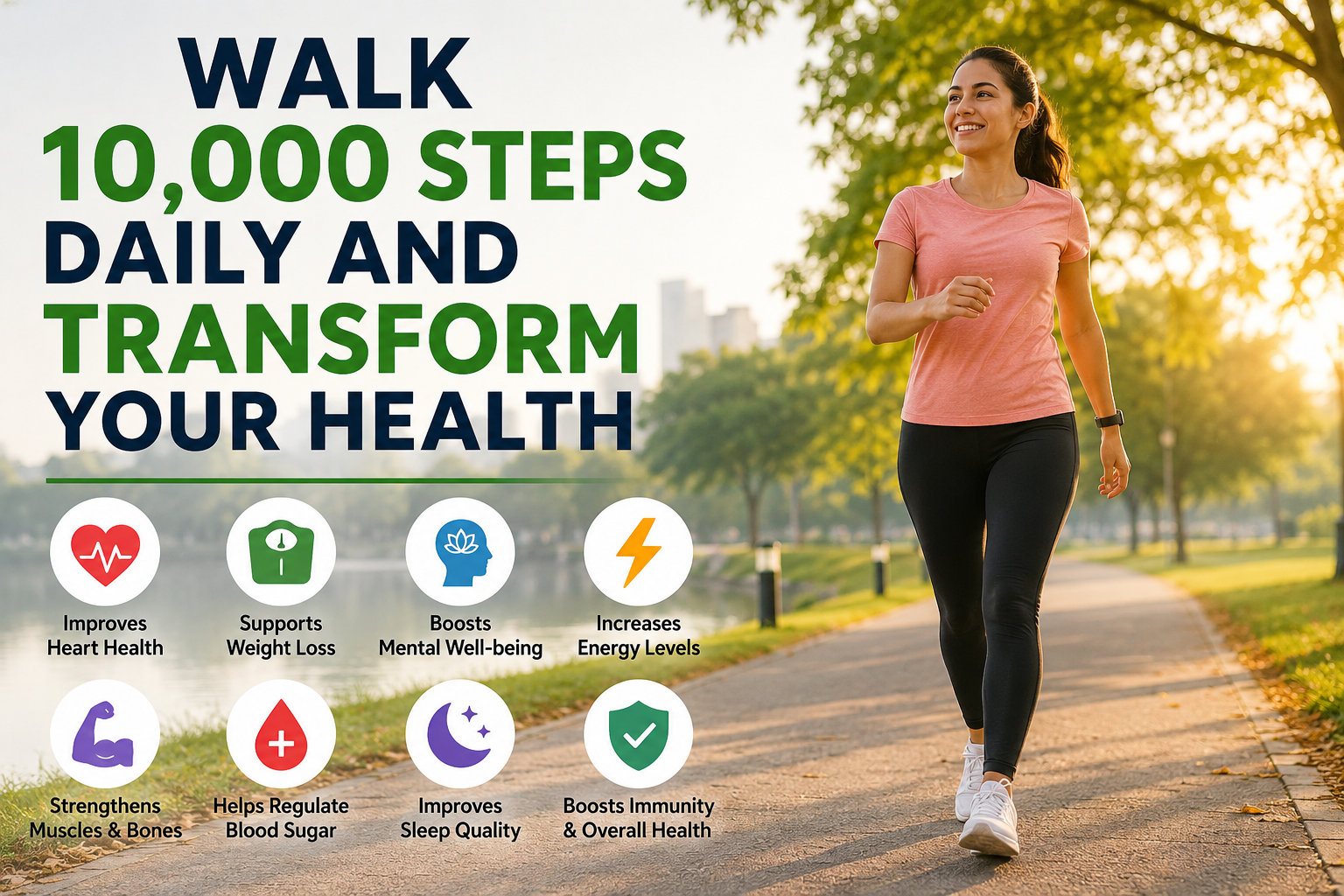
Walking is one of the simplest and most effective forms of exercise. It requires no expensive equipment, no gym membership, and can be done almost anywhere. If you’re looking for a simple way to improve your overall well-being, the idea to walk 10,000 steps daily and transform your health may be exactly what you need. This widely recommended fitness goal can have a remarkable impact on your physical and mental health, from supporting weight management and heart health to boosting mood and energy levels. But what actually happens to your body when you consistently reach this milestone every day?
Walk 10,000 Steps Daily and Transform Your Health
Walking 10,000 steps daily can have a remarkable impact on your physical health, mental well-being, weight management, and overall quality of life. This simple habit can help strengthen your heart, improve fitness, boost energy levels, support weight loss, and even enhance your mood. Best of all, it is an activity that almost anyone can incorporate into their daily routine.
Whether you’re trying to lose weight, improve your fitness, reduce stress, or simply maintain a healthier lifestyle, walking 10,000 steps a day can be a powerful step toward achieving your goals.
In this article, we’ll explore the science-backed benefits of walking 10,000 steps every day and discover how this simple habit can transform your health over time.
What Does 10,000 Steps Mean?
On average, 10,000 steps equals approximately 7 to 8 kilometers (4 to 5 miles), depending on your stride length. Most people can achieve this goal by walking for about 60 to 90 minutes throughout the day.
The good news is that you don’t have to complete all 10,000 steps at once. You can spread them throughout the day by taking short walks, using stairs, and staying active.
- Supports Healthy Weight Loss
One of the biggest reasons people aim for 10,000 steps a day is weight management.
Walking helps burn calories and increases your daily energy expenditure. Depending on your weight, walking 10,000 steps can burn approximately 300–600 calories.
How It Helps:
- Burns extra calories
- Reduces body fat over time
- Supports a healthy metabolism
- Helps maintain weight loss
Combined with a balanced diet, walking can be an effective and sustainable way to lose weight.
- Improves Heart Health
Walking is excellent for cardiovascular health.
Regular walking strengthens the heart, improves circulation, and helps maintain healthy blood pressure levels.
Benefits for Your Heart:
- Lowers blood pressure
- Reduces bad cholesterol (LDL)
- Increases good cholesterol (HDL)
- Improves blood circulation
- Lowers the risk of heart disease and stroke
A stronger heart means better overall health and longevity.
- Boosts Mental Health and Mood
Walking isn’t just beneficial for your body—it’s also great for your mind.
Physical activity triggers the release of endorphins, often called “feel-good hormones.”
Mental Health Benefits:
- Reduces stress
- Lowers anxiety levels
- Helps combat depression
- Improves mood
- Increases feelings of relaxation
Many people notice improved mental clarity and emotional balance after incorporating daily walks into their routine.
- Increases Energy Levels
Although it may seem counterintuitive, expending energy through walking can actually help you feel more energized.
Regular movement improves oxygen delivery throughout the body and enhances circulation.
Result:
- Reduced fatigue
- Increased stamina
- Better productivity
- Improved daily performance
People who walk regularly often report feeling more energetic throughout the day.
- Strengthens Muscles and Joints
Walking engages multiple muscle groups including:
- Legs
- Glutes
- Core muscles
- Lower back
Consistent walking can improve muscle endurance and support joint health.
Benefits:
- Better mobility
- Increased flexibility
- Stronger leg muscles
- Reduced stiffness
Walking is also a low-impact exercise, making it suitable for people of different ages and fitness levels.
- Supports Healthy Blood Sugar Levels
Walking helps muscles use glucose more efficiently, which can improve blood sugar regulation.
Benefits:
- Better insulin sensitivity
- Reduced blood sugar spikes after meals
- Lower risk of type 2 diabetes
- Improved metabolic health
Even a short walk after meals can help regulate blood sugar levels.
- Improves Sleep Quality
Many people struggle with poor sleep due to stress, inactivity, or irregular schedules.
Regular walking can help improve sleep patterns by:
- Reducing stress hormones
- Promoting relaxation
- Regulating the body’s internal clock
Benefits:
- Fall asleep faster
- Sleep more deeply
- Wake up feeling refreshed
Quality sleep contributes to better overall health and recovery.
- Enhances Brain Function
Walking increases blood flow to the brain, which supports cognitive function.
Potential Benefits:
- Improved memory
- Better concentration
- Enhanced creativity
- Sharper thinking skills
Studies suggest that regular physical activity may help reduce the risk of age-related cognitive decline.
- Strengthens Bones
Weight-bearing activities like walking help maintain bone density.
Benefits:
- Stronger bones
- Reduced risk of osteoporosis
- Better balance and stability
- Lower risk of fractures
This is especially important as we age.
- Improves Digestion
Walking can stimulate digestive activity and help food move through the digestive system more efficiently.
Benefits:
- Reduced bloating
- Improved digestion
- Less constipation
- Better gut health
A short walk after meals can be particularly beneficial.
- Builds Healthy Habits and Discipline
One often-overlooked benefit of walking 10,000 steps daily is the positive impact on lifestyle habits.
When you commit to a daily step goal, you’re more likely to:
- Stay active
- Make healthier food choices
- Maintain a consistent routine
- Develop long-term fitness habits
Small daily actions often lead to significant long-term results.
Walk 10,000 Steps Daily and Transform Your Health
What Happens After One Week?
Many people notice:
- Increased energy
- Better mood
- Improved sleep
- Reduced stress
- Feeling more active
What Happens After One Month?
You may begin to experience:
- Weight loss
- Improved endurance
- Better cardiovascular fitness
- Enhanced muscle tone
- Healthier blood pressure levels
What Happens After Several Months?
Long-term benefits can include:
- Lower body fat percentage
- Stronger heart
- Improved metabolic health
- Better mental well-being
- Reduced risk of chronic diseases
Consistency is the key to experiencing these lasting benefits.
Tips for Reaching 10,000 Steps Daily
- Take Short Walking Breaks
Walk for 5–10 minutes every hour.
- Walk After Meals
A short walk after eating can add steps and support digestion.
- Use Stairs
Choose stairs instead of elevators whenever possible.
- Park Farther Away
A simple way to increase daily movement.
- Track Your Steps
Use a fitness tracker or smartphone app to monitor progress.
Disclaimer
This article is for educational and informational purposes only and should not be considered medical advice. Consult a qualified healthcare professional before starting any new exercise program, especially if you have existing health conditions or concerns.
Conclusion
Walking 10,000 steps every day is a simple habit that can deliver powerful health benefits. From supporting weight loss and heart health to improving mood, sleep, and energy levels, this daily activity can positively impact nearly every part of your body.
Remember that consistency matters more than perfection. Even if you don’t reach exactly 10,000 steps every day, increasing your daily movement can still lead to meaningful improvements in your health.
Start where you are, stay consistent, and let each step bring you closer to a healthier and happier life.