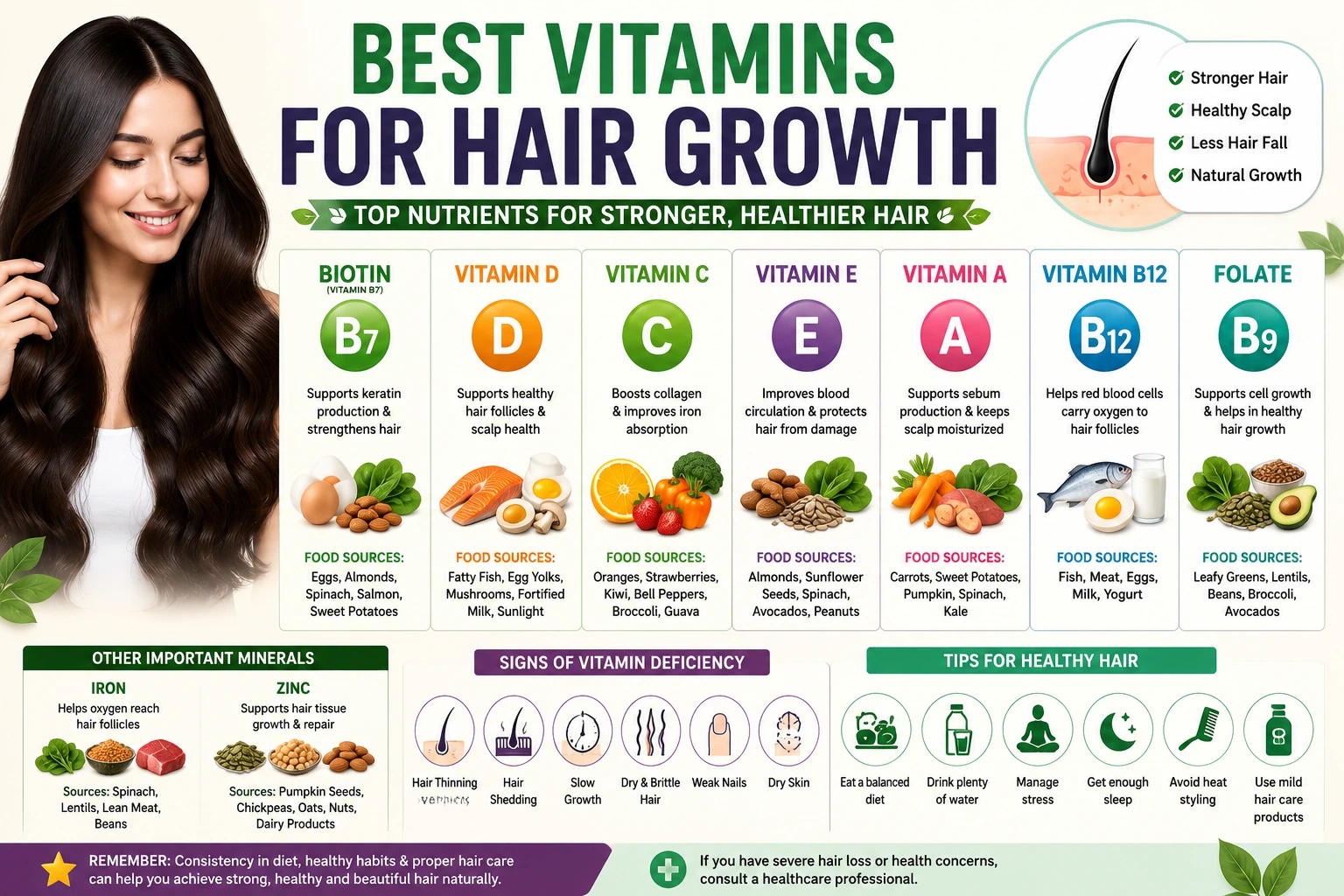
Healthy hair starts from within. While good hair care products can help protect your hair, your body also needs the right nutrients to support healthy hair growth. Vitamins play an important role in keeping your hair strong, shiny, and healthy.
If your diet lacks essential vitamins, you may notice hair thinning, increased hair shedding, or slow hair growth. Eating a balanced diet that includes vitamin-rich foods can help support healthy hair over time.
In this article, you will learn about the best vitamins for hair growth, their benefits, natural food sources, and simple tips for maintaining healthy hair.
Why Are Vitamins Important for Hair Growth?
Hair follicles need a steady supply of nutrients to grow healthy hair. Vitamins support many important functions, including:
- Healthy hair growth
- Strong hair roots
- Healthy scalp
- Hair shine and texture
- Reduced hair breakage
- Normal hair growth cycle
While vitamins are important, many factors can affect hair health, including genetics, age, hormones, stress, and certain medical conditions.
Also Read : How Often Should You Wash Your Hair? A Complete Guide for Healthy Hair
Can Stress Lead to Hair Fall? Causes, Signs, and Effective Solutions
Best Essential Oils for Hair: Natural Solutions for Stronger, Healthier Hair
1. Biotin (Vitamin B7)
Biotin is one of the most well-known vitamins for healthy hair. It helps your body produce keratin, a protein that forms the structure of your hair.
Benefits of Biotin
- Supports healthy hair growth
- Helps strengthen hair
- May reduce hair breakage in people who are deficient
- Supports healthy nails and skin
Natural Food Sources
- Eggs
- Almonds
- Sweet potatoes
- Spinach
- Salmon
- Sunflower seeds
2. Vitamin D
Vitamin D supports healthy hair follicles and overall scalp health.
Some people with low vitamin D levels may also experience hair loss, although hair loss has many possible causes.
Benefits
- Supports healthy hair follicles
- Helps maintain scalp health
- Supports the immune system
Food Sources
- Fatty fish
- Egg yolks
- Fortified milk
- Fortified cereals
- Mushrooms exposed to sunlight
Sunlight also helps your body produce vitamin D.
3. Vitamin C
Vitamin C is a powerful antioxidant that protects hair follicles from damage caused by free radicals.
It also helps the body absorb iron, an important mineral for healthy hair.
Benefits
- Supports collagen production
- Improves iron absorption
- Helps protect hair follicles
- Supports healthy scalp tissue
Food Sources
- Oranges
- Strawberries
- Kiwi
- Bell peppers
- Broccoli
- Guava
4. Vitamin E
Vitamin E helps protect cells from oxidative stress and supports a healthy scalp.
Benefits
- Supports scalp health
- Helps improve hair shine
- Protects hair from environmental damage
Food Sources
- Almonds
- Sunflower seeds
- Spinach
- Avocados
- Peanuts
5. Vitamin A
Vitamin A helps the skin produce sebum, a natural oil that keeps the scalp moisturized.
However, too much vitamin A can also contribute to hair loss. It is best to consume it in recommended amounts.
Food Sources
- Carrots
- Sweet potatoes
- Pumpkin
- Spinach
- Kale
6. Vitamin B12
Vitamin B12 helps produce healthy red blood cells that carry oxygen throughout the body, including to the scalp and hair follicles.
Benefits
- Supports healthy hair follicles
- Helps maintain normal energy levels
- Supports overall cell health
Food Sources
- Fish
- Meat
- Eggs
- Milk
- Yogurt
People following vegetarian or vegan diets may need fortified foods or supplements if recommended by a healthcare professional.
7. Folate (Vitamin B9)
Folate supports healthy cell growth, including the cells involved in hair growth.
Food Sources
- Leafy green vegetables
- Lentils
- Beans
- Broccoli
- Avocados
Minerals That Also Support Healthy Hair
In addition to vitamins, certain minerals are important for healthy hair.
Iron
Iron helps carry oxygen to hair follicles. Low iron levels may contribute to hair loss in some people.
Food Sources
- Spinach
- Lentils
- Lean meat
- Beans
Zinc
Zinc supports healthy hair tissue and scalp health.
Food Sources
- Pumpkin seeds
- Chickpeas
- Oats
- Nuts
- Dairy products
Signs of Vitamin Deficiency That May Affect Hair
Some signs that may be associated with nutrient deficiencies include:
- Increased hair shedding
- Hair thinning
- Dry or brittle hair
- Slow hair growth
- Weak nails
- Dry skin
These symptoms can also have other causes. If you notice significant or persistent hair loss, consult a healthcare professional for proper evaluation.
Tips for Healthy Hair Growth
Follow these simple habits to support healthy hair:
- Eat a balanced diet.
- Include fruits and vegetables every day.
- Eat enough protein.
- Stay hydrated.
- Manage stress.
- Get enough sleep.
- Avoid excessive heat styling.
- Use a mild shampoo suitable for your hair type.
- Protect your hair from excessive sun exposure.
Should You Take Vitamin Supplements?
Most people can get enough vitamins by eating a balanced diet. Supplements may be helpful if a healthcare professional confirms a deficiency or recommends them based on your individual needs.
Taking high doses of vitamins without medical advice is not recommended, as too much of certain vitamins can be harmful.
Conclusion
Healthy hair depends on good nutrition, proper hair care, and a healthy lifestyle. Vitamins such as Biotin, Vitamin D, Vitamin C, Vitamin E, Vitamin A, Vitamin B12, and Folate all play important roles in supporting healthy hair.
Instead of relying only on supplements, focus on eating a balanced diet that includes a variety of nutrient-rich foods. If you experience ongoing hair loss or other concerning symptoms, consult a healthcare professional to identify the underlying cause.
Frequently Asked Questions (FAQs)
Q1. Which vitamin is best for hair growth?
Ans – Biotin (Vitamin B7), Vitamin D, Vitamin C, Vitamin E, Vitamin A, Vitamin B12, and Folate all support healthy hair. The “best” vitamin depends on whether you have a specific deficiency.
Q2. Can vitamins stop hair loss?
Ans – Vitamins may help improve hair health if hair loss is related to a nutrient deficiency. However, hair loss can have many causes, including genetics, hormonal changes, stress, and medical conditions.
Q3. Is Biotin good for hair growth?
Ans – Biotin helps the body produce keratin and supports healthy hair, especially in people who are deficient in biotin.
Q4. Which foods are rich in Biotin?
Ans – Eggs, almonds, spinach, salmon, sunflower seeds, and sweet potatoes are good natural sources of biotin.
Q5. Does Vitamin D help hair growth?
Ans – Vitamin D supports healthy hair follicles, and low vitamin D levels have been linked to some types of hair loss.
Q6. Can I get enough vitamins from food?
Ans – Yes. A balanced diet with fruits, vegetables, whole grains, lean proteins, healthy fats, and dairy or fortified alternatives can provide most people with the vitamins they need.
Q7. How long does it take to see results?
Ans – Hair grows slowly, so noticeable improvements from better nutrition may take several months. Results vary from person to person.
Q8. Should I take hair vitamins every day?
Ans – Only take vitamin supplements if recommended by a healthcare professional or if you have a confirmed deficiency. Taking unnecessary supplements or high doses may not improve hair growth and can sometimes be harmful.