
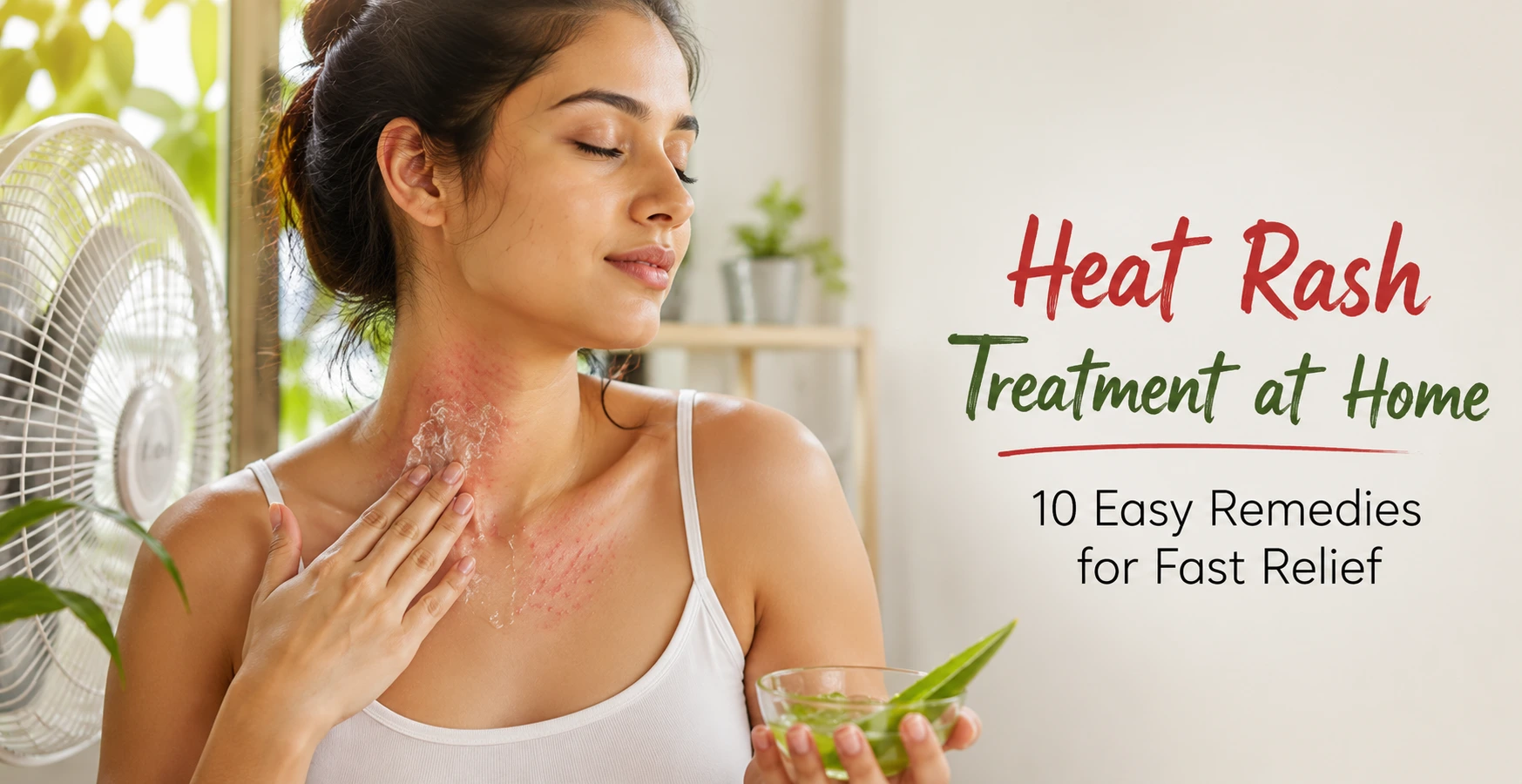
Summer heat can be tough on your skin. One common problem many people face during hot and humid weather is heat rash. Also known as prickly heat, heat rash appears as small red bumps on the skin and can cause itching, burning, and discomfort.
The good news is that in most cases, heat rash treatment at home is simple and effective. With proper care and a few natural remedies, you can relieve symptoms and help your skin heal faster.
What Is Heat Rash?
Heat rash occurs when sweat gets trapped under the skin because sweat ducts become blocked. This condition is most common during summer, especially in hot and humid climates.
Heat rash can affect people of all ages, but it is particularly common in children, athletes, and individuals who sweat heavily.
Common Symptoms of Heat Rash
Before starting heat rash treatment at home, it is important to recognize the symptoms:
- Small red bumps on the skin
- Itching or prickling sensation
- Mild swelling
- Burning or stinging feeling
- Skin irritation in sweaty areas
Heat rash often develops on the neck, chest, back, underarms, groin area, and skin folds.
Also Read : 1. Why Pimples Increase in Summer: Causes, Prevention, and Easy Remedies
2. Why Your Skin Looks Dull and How to Fix It?
Causes of Heat Rash
Several factors can contribute to heat rash, including:
- Hot and humid weather
- Excessive sweating
- Tight clothing
- Poor air circulation
- Intense physical activity
- Staying in wet or sweaty clothes for long periods
Understanding the cause can help prevent future outbreaks.
Heat Rash Treatment at Home: 10 Effective Remedies
1. Keep Your Skin Cool
The first step in heat rash treatment at home is cooling the affected area.
- Stay in an air-conditioned room if possible.
- Use a fan to improve airflow.
- Avoid direct sunlight during peak heat hours.
Cooling the skin helps reduce inflammation and irritation.
2. Take a Cool Shower
A cool shower can provide immediate relief from itching and discomfort.
- Use cool or lukewarm water.
- Avoid hot water, as it can worsen the rash.
- Pat your skin dry gently after bathing.
3. Apply Aloe Vera Gel
Aloe vera is known for its soothing and anti-inflammatory properties.
Benefits include:
- Reduces redness
- Calms irritated skin
- Provides a cooling effect
Apply pure aloe vera gel to the affected area two to three times daily.
4. Use Cold Compresses
Cold compresses are one of the easiest methods for heat rash treatment at home.
- Wrap ice cubes in a clean cloth.
- Apply for 10–15 minutes.
- Repeat several times a day.
This helps reduce itching and swelling.
5. Wear Loose Cotton Clothing
Tight clothes trap sweat and increase skin irritation.
Choose:
- Lightweight cotton fabrics
- Loose-fitting clothes
- Breathable materials
This allows sweat to evaporate naturally.
6. Stay Hydrated
Drinking enough water helps regulate body temperature and reduce excessive sweating.
Aim to:
- Drink water regularly throughout the day.
- Include fresh fruits with high water content.
- Avoid excessive caffeine and sugary drinks.
7. Apply Calamine Lotion
Calamine lotion is commonly used to relieve itching and irritation.
Benefits:
- Soothes the skin
- Reduces discomfort
- Helps control itching
Always follow product instructions before use.
8. Avoid Heavy Creams and Oils
Thick creams can block pores and worsen heat rash.
Avoid:
- Heavy moisturizers
- Petroleum-based products
- Oily skin products
Use lightweight and non-comedogenic skincare products instead.
9. Try an Oatmeal Bath
Oatmeal has natural skin-soothing properties.
How to use:
- Add finely ground oatmeal to cool bath water.
- Soak for 15–20 minutes.
- Pat your skin dry gently.
This can help reduce itching and irritation naturally.
10. Keep the Affected Area Dry
Moisture can make heat rash worse.
Tips:
- Change sweaty clothes promptly.
- Use a clean towel to keep skin dry.
- Avoid prolonged sweating whenever possible.
Keeping the area dry supports faster healing.
How to Prevent Heat Rash During Summer
Prevention is often easier than treatment.
Follow these tips:
- Wear breathable clothing.
- Stay in cool environments.
- Take frequent showers during hot weather.
- Avoid excessive outdoor activity during peak heat.
- Drink plenty of water.
- Keep skin clean and dry.
These habits can significantly reduce the risk of developing heat rash.
When Should You See a Doctor?
Although heat rash usually improves within a few days, seek medical advice if:
- Symptoms persist for more than a week.
- The rash becomes painful.
- Pus or signs of infection appear.
- You develop fever along with the rash.
A healthcare professional can determine whether another skin condition is causing the symptoms.
Conclusion:
Heat rash is a common summer skin problem, but it can usually be managed without medical treatment. By following these simple heat rash treatment at home remedies, you can reduce itching, soothe irritated skin, and recover more quickly. Keeping your skin cool, dry, and well-ventilated is the key to preventing future outbreaks and staying comfortable during hot weather.
Frequently Asked Questions(FAQ):
Q1. How long does heat rash last?
Ans – Most cases improve within a few days once the skin is kept cool and dry.
Q2. Is heat rash contagious?
Ans – No, heat rash is not contagious and cannot spread from person to person.
Q3. Can adults get heat rash?
Ans – Yes. While common in babies, adults can also develop heat rash, especially during hot weather or intense physical activity.
Q4. What is the fastest heat rash treatment at home?
Ans – Cooling the skin, taking cool showers, using aloe vera gel, and wearing loose cotton clothing are among the fastest ways to find relief.