
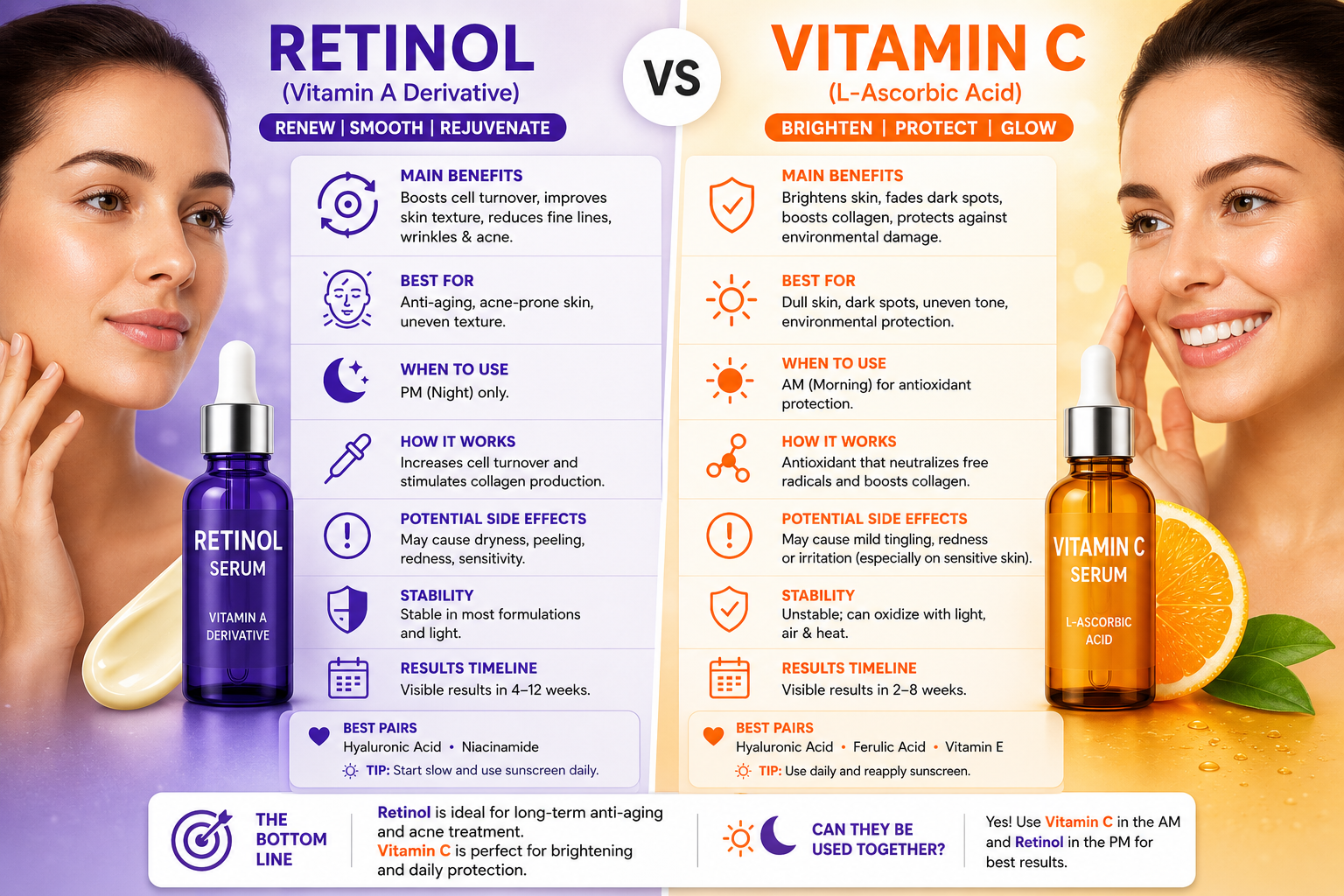
Retinol vs Vitamin C – Which is Better for Your Skin?
Introduction
In today’s skincare world, two ingredients dominate almost every routine—retinol and vitamin C. From dermatologists to beauty influencers, everyone seems to recommend them. But if you’re confused about which one to choose, you’re not alone.
Both ingredients promise healthier, clearer, and more youthful-looking skin—but they target different concerns and work in completely different ways. Understanding how each one functions can help you build a routine that actually delivers results instead of wasting time and money.So, let’s break it down in a simple and practical way 👇
What is Retinol?
Retinol is a form of Vitamin A commonly used in skincare products to improve skin texture, reduce signs of aging, and treat acne. It belongs to a group of compounds called retinoids, which help speed up skin cell turnover and stimulate collagen production.
How Retinol Works
When applied to the skin, retinol:
- Encourages old skin cells to shed faster
- Promotes the growth of new skin cells
- Boosts collagen and elastin production
- Helps unclog pores and control oil
This process makes the skin appear smoother, firmer, and more even-toned over time.
Major Benefits of Retinol
- Reduces Fine Lines and Wrinkles: Retinol increases collagen production, which helps improve skin elasticity and reduce visible signs of aging.
- Improves Skin Texture: It smooths rough skin and minimizes enlarged pores.
- Fades Dark Spots and Pigmentation: Retinol helps lighten acne marks, sunspots, and uneven skin tone by speeding up cell renewal.
- Treats Acne: It prevents clogged pores and reduces breakouts, making it useful for acne-prone skin.
- Brightens Skin: Regular use can make dull skin appear healthier and more radiant.
Common Side Effects
During the first few weeks, some people may experience:
- Dryness
- Peeling
- Redness
- Mild irritation
- Increased sensitivity to sunlight
These effects are often temporary while the skin adjusts.
How to Use Retinol Safely
- Start with a low concentration (0.1%–0.3%)
- Use it only 2–3 nights per week at first
- Apply a pea-sized amount on dry skin
- Follow with a moisturizer
- Always wear sunscreen during the day because retinol makes skin more sensitive to UV rays
Who Should Avoid Retinol?
People with very sensitive skin, eczema, or damaged skin barriers should use caution. Pregnant or breastfeeding women are generally advised to avoid retinoids unless approved by a doctor.
Types of Retinoids
- Retinol – gentle and beginner-friendly
- Retinal/Retinaldehyde – stronger and faster acting
- Tretinoin – prescription-strength retinoid
- Adapalene – commonly used for acne treatment
Retinol works gradually, so visible improvements usually appear after 6–12 weeks of consistent use.
What is Vitamin C?
“Vitamin C is a powerful antioxidant that protects and brightens your skin” means it does two important jobs at the same time—defense + glow. Here’s a simple breakdown 👇
Major Benefits of Vitamin C
- Brightens Skin Tone: Vitamin C helps boost your skin’s natural radiance by reducing dullness. It makes your complexion look fresh, glowing, and more even-toned.
- Protects from Sun & Environmental Damage: As a powerful antioxidant, Vitamin C fights harmful free radicals caused by UV rays and pollution, helping prevent early signs of aging and skin damage.
- Fades Dark Spots and Pigmentation: Vitamin C reduces excess melanin production, which helps lighten acne marks, sunspots, and uneven skin tone for clearer skin.
- Boosts Collagen Production: It supports collagen synthesis, improving skin firmness and reducing fine lines, making your skin look smoother and younger.
- Improves Skin Texture: Regular use helps make your skin softer and smoother by promoting healthy skin repair and reducing roughness.
- Enhances Natural Glow: Vitamin C revitalizes tired-looking skin, giving it a healthy, radiant, and youthful appearance over time.
Common Mistakes That Cause Side Effects
- Using very high concentration (like 20%+) as a beginner
- Applying on damaged or broken skin
- Mixing with too many active ingredients
- Not moisturizing after application
How to Avoid Side Effects
- Start with low concentration (10–15%)
- Do a patch test first
- Use once daily (preferably morning)
- Always apply sunscreen
Note: Vitamin C protects your skin from daily damage AND makes it look brighter, clearer, and more radiant.
Conclusion
When it comes to Retinol vs Vitamin C, there is no single “better” option—because both serve different purposes.
- Retinol is your go-to ingredient for reducing wrinkles, acne, and improving skin texture.
- Vitamin C is perfect for brightening your skin, reducing pigmentation, and protecting against daily damage.
The real secret to healthy, glowing skin isn’t choosing one over the other—it’s knowing how and when to use both correctly. By combining them in your routine (Vitamin C in the morning and retinol at night), you can unlock the full potential of your skincare and achieve long-term results.