Hello everyone, and thank you for stopping by! Becoming a mother is a beautiful experience, but it’s completely normal to want to feel comfortable and confident in your body again after pregnancy. In this article we will discuss about How to Lose Belly Fat After Pregnancy with Healthy Foods. I hope this article will help you understand how proper nutrition and healthy habits can support postpartum belly fat reduction in a safe and sustainable way.
Losing belly fat after pregnancy requires patience, consistency, healthy eating, regular physical activity, proper sleep, and self-care. Crash diets and extreme workouts are not recommended, especially for breastfeeding mothers. Instead, focusing on gradual and sustainable lifestyle changes can help you regain strength and improve your overall health.
Why Does Belly Fat Remain After Pregnancy?
Several factors contribute to post-pregnancy belly fat:
- Stretched Abdominal Muscles
During pregnancy, the growing baby stretches the abdominal muscles. These muscles may take several months to regain their strength and tone.
- Hormonal Changes
Hormones fluctuate significantly after childbirth. These changes can affect metabolism and how the body stores fat.
- Weight Gained During Pregnancy
Gaining weight during pregnancy is natural and necessary. However, some of this weight may remain after delivery.
- Lack of Sleep
New mothers often experience sleep deprivation, which can increase hunger hormones and make weight loss more difficult.
- Reduced Physical Activity
Recovering from childbirth and caring for a newborn can limit opportunities for exercise.
When Can You Start Losing Belly Fat?
The timing depends on the type of delivery and your overall health.
- Normal Delivery: Light walking may begin within a few days if approved by your doctor.
- C-Section Delivery: Recovery usually takes longer. Follow your healthcare provider’s recommendations before starting exercise.
Always consult your doctor before beginning a postpartum fitness routine.
Best Ways to Reduce Belly Fat After Pregnancy
- Eat a Balanced and Nutritious Diet
Healthy eating plays a major role in postpartum weight loss.
Include:
✔ Fresh fruits and vegetables
✔ Whole grains
✔ Lean protein sources
✔ Healthy fats
✔ Plenty of water
Limit:
✖ Sugary drinks
✖ Processed foods
✖ Excess sweets
✖ Fried foods
Benefits
- Supports recovery
- Provides energy
- Helps control cravings
- Promotes healthy weight loss
- Increase Protein Intake
Protein helps keep you full for longer and supports muscle recovery.
Good Sources of Protein
- Eggs
- Greek yogurt
- Lentils
- Beans
- Chicken
- Fish
- Tofu
- Paneer
Benefits
- Reduces hunger
- Supports muscle repair
- Boosts metabolism
- Stay Hydrated
Drinking enough water is essential for recovery and weight management.
Tips
- Drink water throughout the day.
- Keep a water bottle nearby.
- Drink water before meals.
Benefits
- Supports digestion
- Reduces bloating
- Helps control appetite
- Start Walking Daily
Walking is one of the safest postpartum exercises.
How to Begin
- Start with 10–15 minutes daily.
- Gradually increase to 30–45 minutes.
- Walk at a comfortable pace.
Benefits
- Burns calories
- Improves circulation
- Reduces stress
- Supports heart health
- Perform Postpartum Core Exercises
Strengthening the abdominal muscles can help flatten the belly over time.
Effective Exercises
Pelvic Tilts
- Lie on your back.
- Tighten abdominal muscles.
- Hold for a few seconds.
- Repeat 10–15 times.
Heel Slides
- Lie on your back with knees bent.
- Slowly slide one heel away.
- Return to starting position.
Deep Belly Breathing
- Inhale deeply.
- Expand the abdomen.
- Exhale while gently tightening core muscles.
Benefits
- Strengthens core muscles
- Improves posture
- Supports abdominal recovery
- Try Yoga
Yoga helps improve flexibility, strength, and mental well-being.
Helpful Yoga Poses
- Cat-Cow Stretch
- Child’s Pose
- Bridge Pose
- Modified Plank
- Cobra Pose
Benefits
- Strengthens abdominal muscles
- Reduces stress
- Improves posture
- Enhances flexibility
- Get Enough Sleep
Sleep deprivation can affect hormones that regulate hunger and fat storage.
Tips for Better Sleep
- Sleep when the baby sleeps.
- Share nighttime duties when possible.
- Create a calming bedtime routine.
Benefits
- Supports metabolism
- Reduces cravings
- Improves recovery
- Manage Stress
Stress can increase cortisol levels, which may contribute to fat accumulation around the abdomen.
Stress-Relief Activities
- Meditation
- Deep breathing
- Gentle stretching
- Listening to music
- Spending time outdoors
Benefits
- Improves mood
- Reduces emotional eating
- Supports weight management
- Breastfeeding May Help Burn Calories
Breastfeeding can increase calorie expenditure and may support gradual weight loss for some mothers.
Additional Benefits
- Provides optimal nutrition for the baby
- Supports bonding
- Helps the uterus return to its pre-pregnancy size
- Avoid Crash Diets
Extreme dieting can slow metabolism and reduce energy levels.
Why Avoid Them?
- May affect milk supply
- Causes nutrient deficiencies
- Difficult to maintain long-term
Better Approach
Focus on balanced meals and gradual weight loss.
Foods which Help to Reduce Postpartum Belly Fat
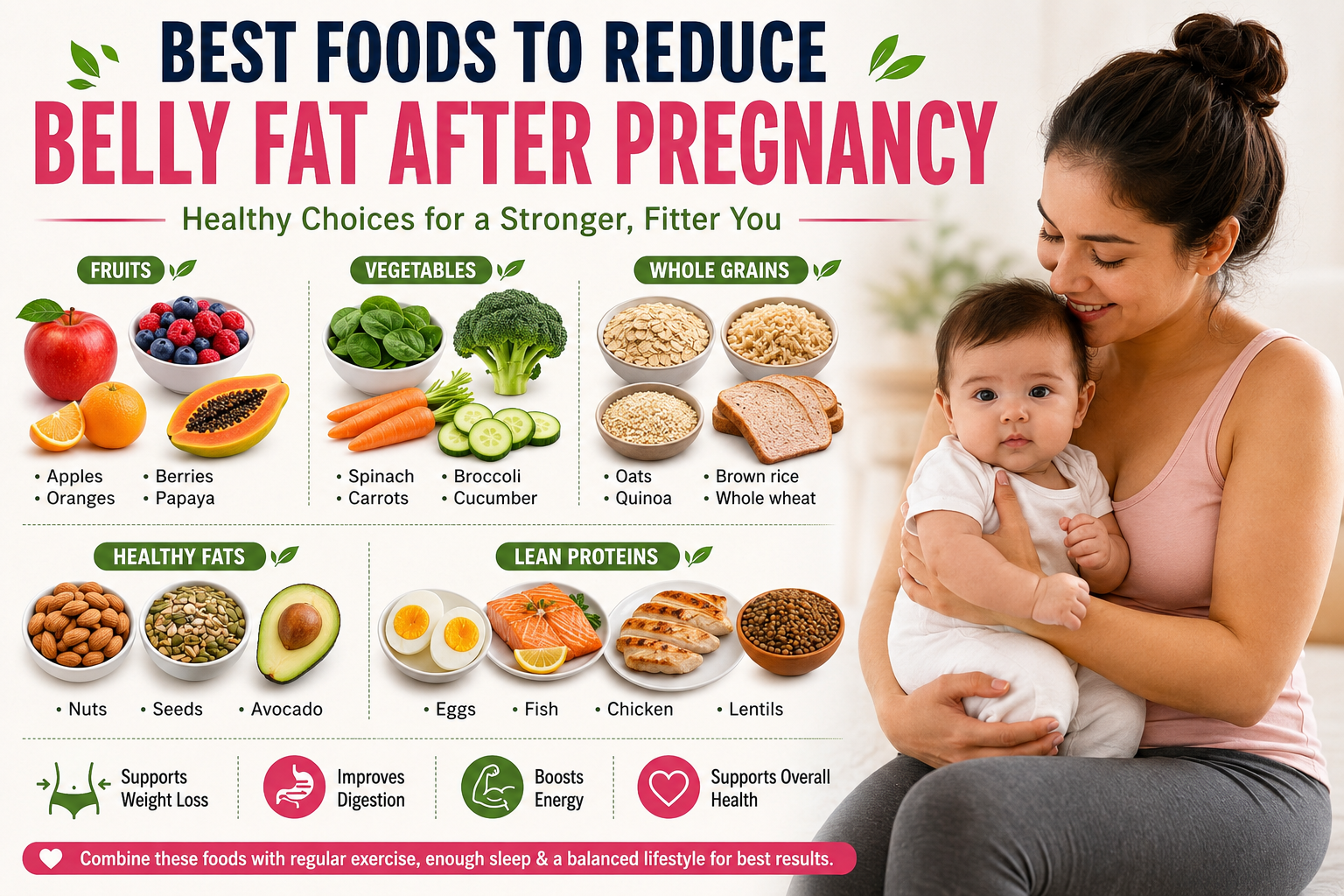
After pregnancy, your body needs proper nutrition to recover, maintain energy levels, support breastfeeding (if applicable), and gradually lose excess weight. While no single food can directly “burn” belly fat, these nutrient-rich foods can help support healthy weight loss and reduce fat accumulation when combined with a balanced lifestyle.
Apples
Apples are rich in fiber, especially pectin, which helps you feel full for a longer time. This can reduce unnecessary snacking and overeating. Apples are also low in calories and contain antioxidants that support overall health.
Berries
Berries such as strawberries, blueberries, and raspberries are packed with fiber and antioxidants. They satisfy sweet cravings naturally while providing important vitamins and minerals.
Oranges
Oranges are high in vitamin C and water content. They can help keep you hydrated and provide natural sweetness without excessive calories.
Papaya
Papaya contains digestive enzymes such as papain that may help improve digestion. Good digestion can help reduce bloating and discomfort after meals.
Spinach
Spinach is rich in fiber, iron, and essential nutrients while being very low in calories. It helps keep you full without adding many calories to your diet.
Broccoli
Broccoli contains fiber and plant compounds that support overall health. It takes time to digest, helping you stay satisfied for longer periods.
Carrots
Carrots are naturally sweet and crunchy, making them a healthy alternative to processed snacks. Their fiber content helps support satiety.
Cucumber
Cucumber has a very high water content and very few calories. It can help you stay hydrated and reduce feelings of bloating.
Oats
Oats contain soluble fiber called beta-glucan, which slows digestion and helps you feel full longer. They also provide steady energy throughout the day.
Brown Rice
Brown rice contains more fiber and nutrients than white rice. It provides sustained energy and helps prevent sudden hunger spikes.
Quinoa
Quinoa is rich in both protein and fiber, making it especially filling. It also contains important minerals that support recovery after pregnancy.
Whole Wheat
Whole wheat products contain fiber that slows digestion and helps maintain stable energy levels.
Nuts
Nuts such as almonds and walnuts provide healthy fats, protein, and fiber. Even small portions can help you feel satisfied.
Seeds
Chia seeds, flaxseeds, and pumpkin seeds contain healthy fats, fiber, and important nutrients that support recovery and weight management.
Avocado
Avocados contain monounsaturated fats that help increase satiety and provide important nutrients for postpartum recovery.
Eggs
Eggs are a complete protein source containing all essential amino acids. Protein helps maintain muscle mass and keeps you satisfied after meals.
Fish
Fish provides protein and, in many cases, omega-3 fatty acids that support overall health and recovery.
Chicken
Skinless chicken is a lean protein source that helps build and maintain muscle while supporting healthy weight loss.
Lentils
Lentils provide both protein and fibre, making them one of the most filling plant-based foods.
Common Mistakes to Avoid
Skipping Meals: Can increase hunger and overeating later.
Not Eating Enough Protein: May lead to increased cravings and muscle loss.
Starting Intense Workouts Too Soon: Can delay recovery and increase injury risk.
Ignoring Sleep: Poor sleep can slow weight loss efforts.
Expecting Immediate Results: Postpartum recovery takes time and varies for every woman.
How Long Does It Take to Lose Belly Fat After Pregnancy?
Every woman’s body is different. Some may notice changes within a few months, while others may take a year or longer. Consistency with healthy habits is more important than rapid weight loss.
Remember that recovery is a journey, not a race.
NOTE:
Reducing belly fat after pregnancy requires a combination of healthy eating, regular physical activity, adequate sleep, hydration, and stress management. Focus on rebuilding strength, nourishing your body, and allowing yourself time to recover. Small, consistent lifestyle changes can lead to lasting results and improved overall well-being.
Rather than aiming for quick fixes, prioritize your health and celebrate every step of your postpartum recovery journey.
Disclaimer
This article is for educational purposes only and should not replace professional medical advice. Every postpartum recovery journey is different. Consult your doctor or healthcare provider before starting any diet or exercise program, especially after a C-section, complicated delivery, or if you have any medical concerns.