
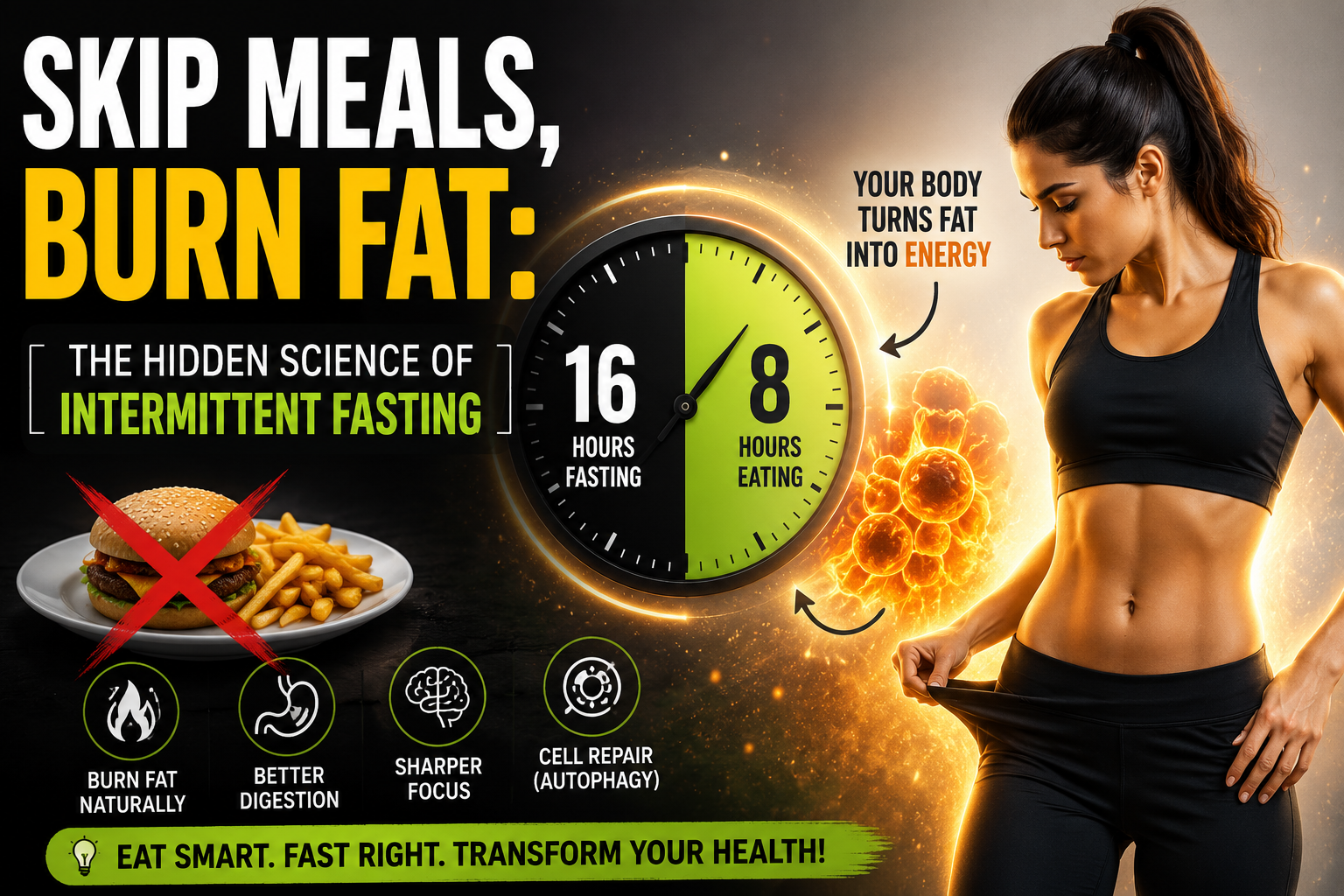
Skip Meals, Burn Fat: The Hidden Science of Intermittent fasting is becoming one of the most popular and effective ways to lose weight naturally without following strict diet plans. By controlling when you eat instead of what you eat, this method helps the body burn stored fat more efficiently and improves overall metabolism. In this article, we’ll uncover the hidden science behind intermittent fasting, its benefits, and how it can support a healthier lifestyle.
Intermittent Fasting: Complete Guide (Benefits, Risks, Science & Practical Use)
“Can skipping meals actually make you lose fat… or is it just another myth?”
Imagine this—after going hours without eating, your body stops relying on sugar and starts burning stored fat instead. That’s the real science behind Intermittent Fasting. This means it’s not just a diet… it actually changes how your body works.
So what exactly is the science behind Intermittent Fasting, and how does it impact your body? 👇
Let’s Be Honest First
Intermittent fasting (IF) is powerful—but it’s not magic. It works well for many people, but if done incorrectly, it can harm your health instead of improving it. So here’s a complete, no-nonsense guide covering everything—benefits, risks, science, and how to do it safely.
What Exactly Happens in Your Body?
When you eat frequently, your body runs on glucose (sugar).
When you fast for several hours:
👉 Phase 1 (0–6 hours after eating)
- Body uses glucose for energy
👉 Phase 2 (6–12 hours)
- Blood sugar drops, Body starts using stored glycogen
👉 Phase 3 (12–16+ hours)
- Glycogen depletes, Body switches to fat burning (ketosis) 🔥
👉 Phase 4 (16–24 hours)
- Cellular repair increases (autophagy),Fat burning accelerates
BENEFITS (Detailed & Realistic)
- Fat Loss (Primary Benefit)
- IF helps reduce calorie intake naturally,Improves insulin sensitivity
- Especially effective for belly fat
- Hormonal Balance
- Insulin levels drop, Growth hormone increases → supports fat loss & muscle preservation
- Brain Health
- Supports production of BDNF (brain protein) and improve: Focus, Memory, Mental clarity
- Heart Health
- Can reduce: Bad cholesterol (LDL), Triglycerides, Blood pressure
- Cellular Repair (Anti-Aging Effect)
- Can activates Autophagy,Removes damaged cells, Supports longevity (based on early research)
- Simplicity
- No calorie counting required, Fewer meals → easier routine
RISKS & SIDE EFFECTS (VERY IMPORTANT)
Low Energy & Weakness
- Especially in beginners You may feel: Dizziness, Headache, Fatigue
Muscle Loss
- If protein intake is low or fasting is too long
Hormonal Issues (Especially in Women)
- Long fasting can affect hormones, may cause: Irregular periods,Hormonal imbalance
Mental Stress & Irritability
- Hunger can affect mood in such case some people feel: Angry & anxious
Risk for Certain Health Conditions
Avoid or consult a doctor if you have:
- Diabetes, Low blood pressure, Eating disorders, Pregnancy or breastfeeding
What Science Says (Reality Check)
IF works mainly because when You eat fewer calories, Your body burns fat more efficiently
❌ Myth: It’s NOT superior to all diets, It’s just one effective method.
👉 Best diet = the one you can follow consistently
What to Eat: Why Foods Matter During Intermittent Fasting
- Protein (Eggs, Paneer, Chicken, Dal)
- Helps preserve muscle mass while you’re losing fat
- Increases satiety (fullness) → you feel less hungry
- Has a high thermic effect (burns more calories during digestion)
👉 During fasting, your body may break down muscle if protein is low—so protein protects your metabolism and keeps fat loss healthy.
- Fiber (Vegetables, Fruits)
- Slows digestion → keeps you full for longer hours
- Prevents sudden blood sugar spikes and crashes
- Improves gut health and digestion
👉 This is especially important in IF because long gaps between meals can otherwise lead to cravings and overeating.
- Healthy Fats (Nuts, Seeds)
- Provides steady, long-lasting energy
- Supports the body’s shift into fat-burning mode
- Helps control hunger hormones
👉 Since IF trains your body to burn fat, eating healthy fats supports that process instead of disrupting it.
- Complex Carbs (Roti, Rice – Controlled)
- Replenishes energy (glycogen) without sharp spikes
- Keeps you energized and prevents weakness
- Supports workout performance
👉 The key is portion control—too many carbs can spike insulin and slow down fat burning.
Drink You Can Take During Fasting (and WHY)
- Water
- Contains zero calories → does not break your fast
- Keeps you hydrated and supports metabolism
- Helps control hunger signals
👉 Simple rule: the more hydrated you are, the easier fasting feels.
- Lemon Water (No Sugar)
Why allowed?
- Very low in calories (if just a few drops of lemon)
- Helps digestion and reduces bloating
- Adds taste, making fasting easier
👉 Just avoid adding sugar or honey, or it will break the fast.
- Black Coffee
Why allowed?
- Almost zero calories
- Boosts metabolism and fat burning
- Reduces appetite (helps you stay in fasting state longer)
👉 Bonus: caffeine can enhance your body’s fat-burning process.
- Green Tea
Why allowed?
- Zero calories
- Contains antioxidants + supports fat oxidation
- Helps reduce cravings
👉 A great option if you want something light and calming.
Drink to Avoid During Fasting (and WHY)
- Sugar
Why not allowed?
- Causes instant insulin spike
- Stops fat burning immediately
- Pushes your body back into fat-storage mode
- Milk Tea / Coffee with Milk
Why not allowed?
- Milk contains calories + lactose (natural sugar)
- Triggers insulin response
- Breaks your fasting state
👉 Even a small amount can reduce the benefits of fasting.
- Juice (Even Fresh Juice)
Why not allowed?
- High in natural sugar (fructose)
- No fiber → sugar absorbs quickly
- Leads to energy crash and hunger
👉 Juice is basically “liquid sugar” during fasting.
The Beginner’s Plan
🗓 Week 1: 12-Hour Fasting (Easy Start)
Example: 8 PM – 8 AM
How it works:
- Your body starts using stored glycogen (sugar) for energy
- Gives your digestive system a rest
- Helps your body adjust to longer gaps without food
👉 This phase is about building the habit, not fat loss yet.
🗓 Week 2: 14-Hour Fasting
Example: 8 PM – 10 AM
How it works:
- Glycogen stores begin to deplete faster
- Your body starts light fat burning
- Hunger hormones (like ghrelin) begin to adjust
👉 You may notice: Less frequent hunger, Better control over cravings.
🗓 Week 3: 16:8 Method (Full IF Mode)
Example:
- Eat: 12 PM – 8 PM
- Fast: 8 PM – 12 PM
How it works:
- Glycogen is mostly depleted
- Body shifts to fat as primary fuel
- Insulin levels stay low → fat burning increases
- Autophagy (cell repair) may start activating
👉 This is where real benefits begin: Fat loss (especially belly fat), Stable energy levels, Improved metabolism.
Why This Step-by-Step Plan is Important
Jumping directly to 16 hours can cause: Extreme hunger, Fatigue, Giving up early
👉 Gradual increase helps: Your body adapt hormonally, reduce cravings naturally, Make fasting sustainable
What’s Happening Inside Your Body?
As fasting hours increase:
- Insulin ↓ (fat burning ON)
- Growth hormone ↑ (muscle protection)
- Body shifts to stored fat for energy
⚡ Pro Tip: Consistency matters more than perfection: even if you follow 80–90%, you’ll still see results.
❌ Common Mistakes (Avoid These)
- Starting with 18–20 hour fasting, not eating enough protein, sleeping late, no exercise, Eating heavy junk after fasting.
👩⚕️ Who Should NOT Do IF?
- Pregnant women, Underweight people, Teenagers (growing age),People with medical conditions
Disclaimer
This content is for educational purposes only. Consult a doctor or nutritionist before starting intermittent fasting, especially if you have medical conditions.